A flooded basement doesn't wait for business hours, and neither do we. Aqua Guard Water Damage keeps trucks staged around Denver so a licensed technician can be pulling standing water within the hour, not scheduling you for next Tuesday.
Call +1-844-234-5373 Now
Our Denver technicians hold IICRC water restoration certifications and carry that training into every job, from a Category 1 clean-water leak to a Category 3 sewage backup. We're not a call center routing you to a random subcontractor; we're the crew that shows up.
We answer our own phones around the clock in Denver, which means the person who books your appointment already knows our schedule, our crew availability, and how fast we can realistically get a truck to your address.
We invest in ongoing training as drying standards and equipment evolve, rather than treating a technician's initial certification as the finish line.

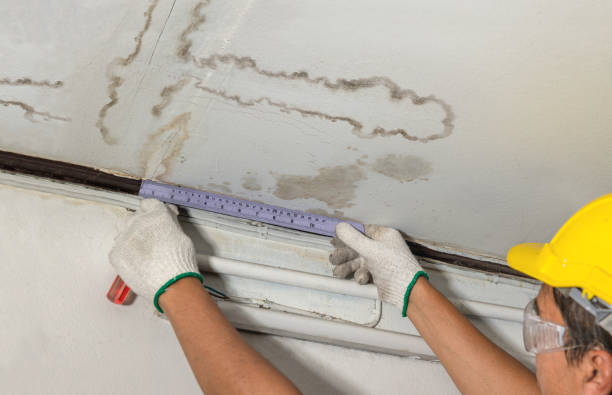
Yellow-brown rings on your ceiling or walls almost always mean water has been sitting behind the surface longer than you think, and the drywall paper backing is likely already feeding mold growth. Waiting to see if the stain spreads only gives moisture more time to travel further into the structure.
If opening windows and running a fan doesn't clear the smell within a day, the moisture source is still active and needs professional extraction, not just ventilation. A smell that returns after cleaning is a strong sign the moisture is still present.
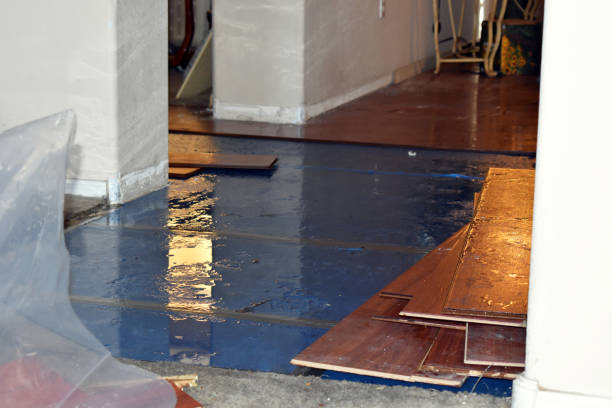
Hardwood that's cupping at the edges or laminate that's separating at the seams is a classic sign of moisture intrusion from below, whether that's a slab leak or groundwater seepage. The longer it sits, the harder the flooring is to salvage.
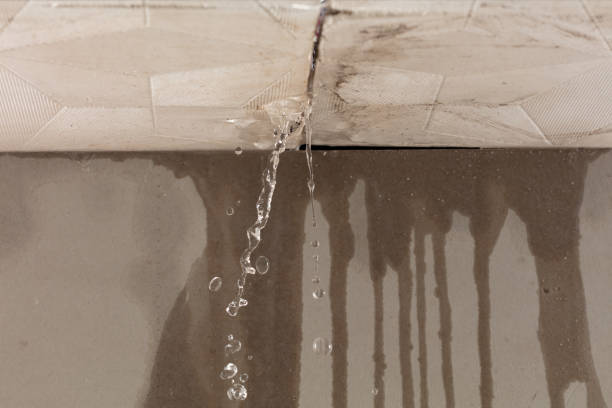
An unexplained jump in your water bill is frequently the first sign of a slab leak or a failing supply line long before any visible water appears. Catching it at this stage is far cheaper than waiting for a visible flood.
Paint that bubbles or peels away from a wall, especially near baseboards, usually means moisture is pushing through from behind rather than a simple application problem.
Dark spotting in grout lines or around window frames is often the first visible sign of a moisture problem that's been developing for weeks.
We treat Flood Damage Repair as one continuous job rather than a series of handoffs — the crew that extracts the water is accountable for the drying results, and the drying results determine what reconstruction is actually needed.
Our crews arrive with truck-mount extraction units capable of pulling thousands of gallons per hour, using moisture meters to classify the water as Category 1, 2, or 3 before drying even starts.
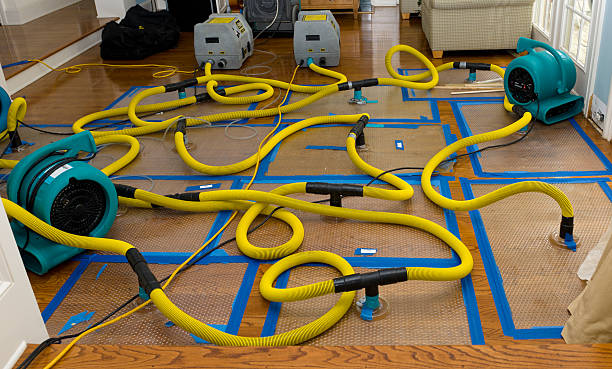
We place industrial air movers and low-grain-refrigerant dehumidifiers based on psychrometric readings, then log moisture levels daily until every affected material returns to a safe drying standard.
Our sewage cleanup protocol follows IICRC S500 contamination standards, isolating the affected area, removing unsalvageable materials, and disinfecting every surface that had contact with blackwater.
Once structural drying is underway, we apply antimicrobial treatments to studs, subfloor, and other porous surfaces to stop mold colonies before they establish, especially in areas that stayed wet more than 48 hours.
Once the structure tests dry, our reconstruction team handles drywall, insulation, flooring, and trim so you're not managing a second contractor after the restoration crew leaves.
We inventory and pack out contents that need to leave the affected area during drying, then coordinate their return once the space is verified dry and repairs are complete.


A real person answers, gathers the details of your water loss, and routes the closest available crew immediately.
The assessment sets the entire plan — skipping it or rushing it is how jobs end up with hidden moisture pockets months later.
Standing water comes out first with truck-mount equipment, then air movers and dehumidifiers go to work based on the psychrometric numbers we recorded.
Final verification is where a lot of shortcuts get taken industry-wide — we treat it as mandatory, not optional.
We operate under proper licensing and insurance in every market we serve, with documentation available on request.
Local staging means shorter drive times, which matters most in the first hour after a water loss.
You get a written estimate before work begins, not a surprise invoice after the drying equipment is already running.
We stand behind every job with a documented re-inspection before we consider the work complete.
If our moisture readings don't hit a safe drying standard on schedule, we keep equipment on site at no additional cost until they do — that's the standard we hold ourselves to.
Our technicians don't get paid faster by closing jobs early, which keeps the incentive aligned with actually finishing the drying properly.
Call +1-844-234-5373Whether your address falls in 80264 80266 80230 80231 80236 80237 80235 80238 80239 80123 80249 80247 80246 80290 80293 80294 80218 80210 80212 80216 80221 80220 80223 80222 80224 80227 80219 80211 80209 80207 80206 80205 80204 80202 80203 80208 80217 80243 80244 80248 80250 80256 80257 80259 80261 80265 80271 80273 80274 80281 80291 80299 80214 80215 80226 80228 80229 80232 80233 80234 80260 or one of the neighboring zip codes we cover, the same crew and the same response standard applies.
We track call volume by zip code across Denver to keep crew staffing matched to where emergencies actually happen most often.

"The team here in Denver treated our emergency like it actually mattered, not like another ticket in a queue, and the drying documentation they left us was thorough enough to hand straight to our insurer."
James R., Denver"What impressed me most was the daily moisture log — I could actually see the numbers improving instead of just being told to trust the process."
Denise M., Denver"They didn't cut corners on the contaminated water cleanup even though it would have been faster to skip the sanitization step — that mattered to me given we have young kids in the house."
Marcus T., Denver"Every question I asked got a straight answer, even the ones about cost, which is rare after dealing with two other contractors who kept dodging the pricing conversation."
Priya S., Denver"Drying logs were shared with us daily so we always knew exactly where the job stood, not just a vague 'it's drying' update."
Carlos V., Denver"They minimized business disruption by sectioning off the wet area instead of shutting down the whole space during drying."
Angela F., Denver"The tech explained exactly which boards needed to come out and which ones tested dry enough to keep, so we didn't pay to replace more than necessary."
Tyrone B., Denver"They explained the sump discharge issue causing our crawl space flooding in plain terms and fixed it as part of the same visit instead of scheduling a separate appointment."
Wendy K., Denver